
Last updated November 14, 2026
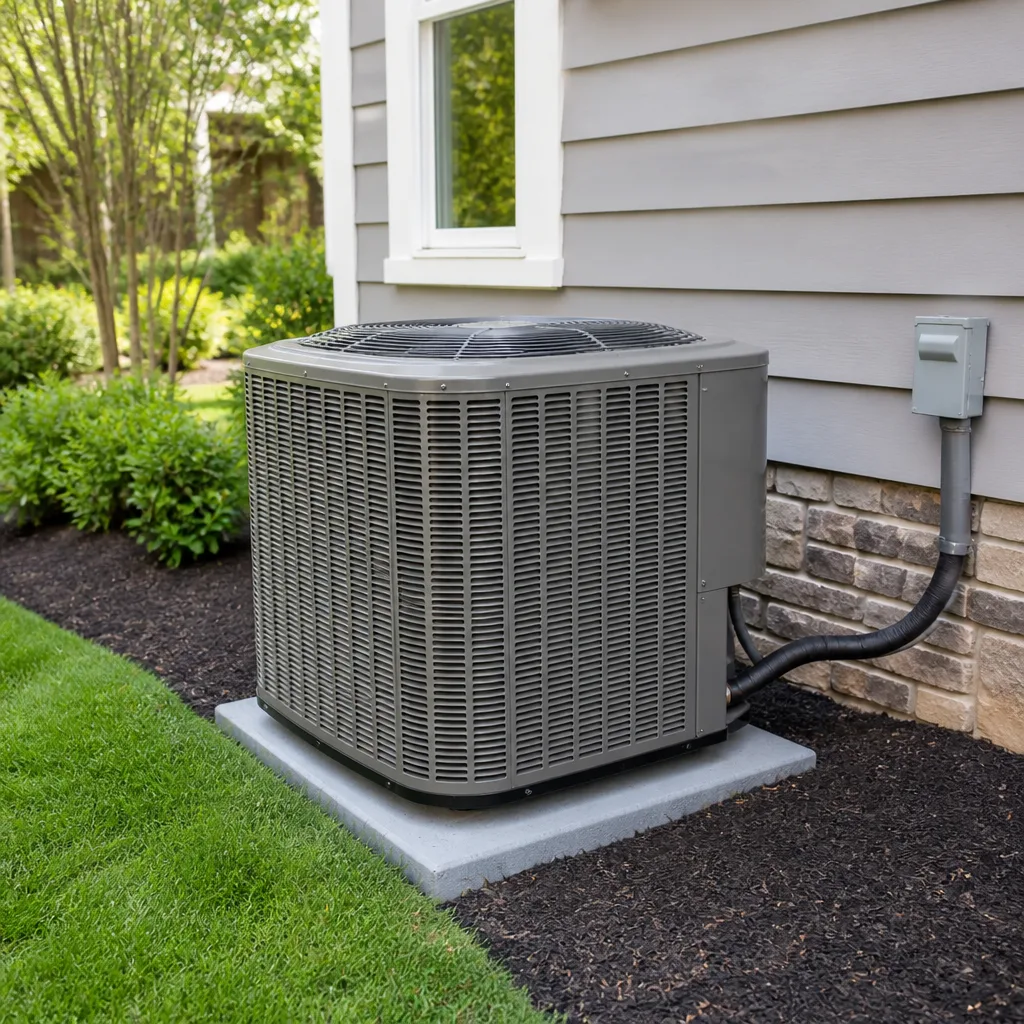 AC repair
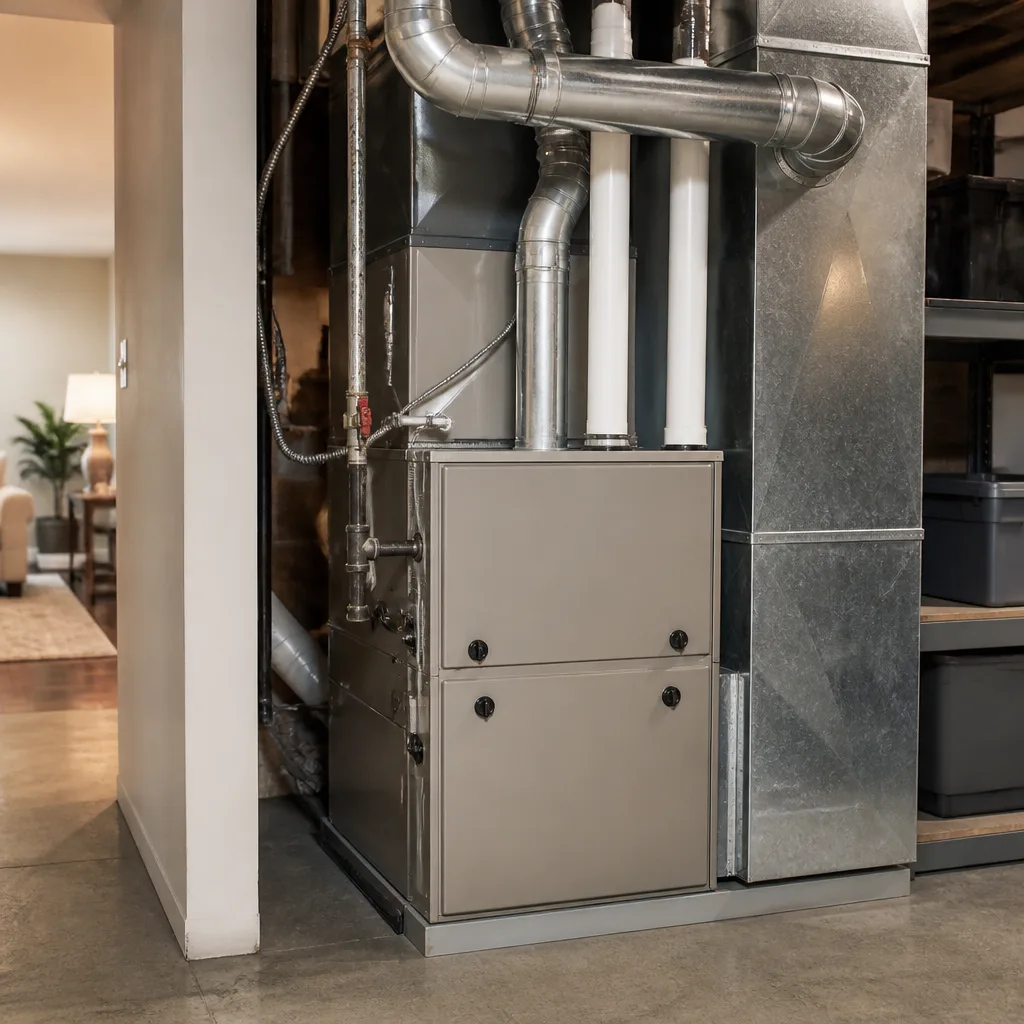 Furnace & heating
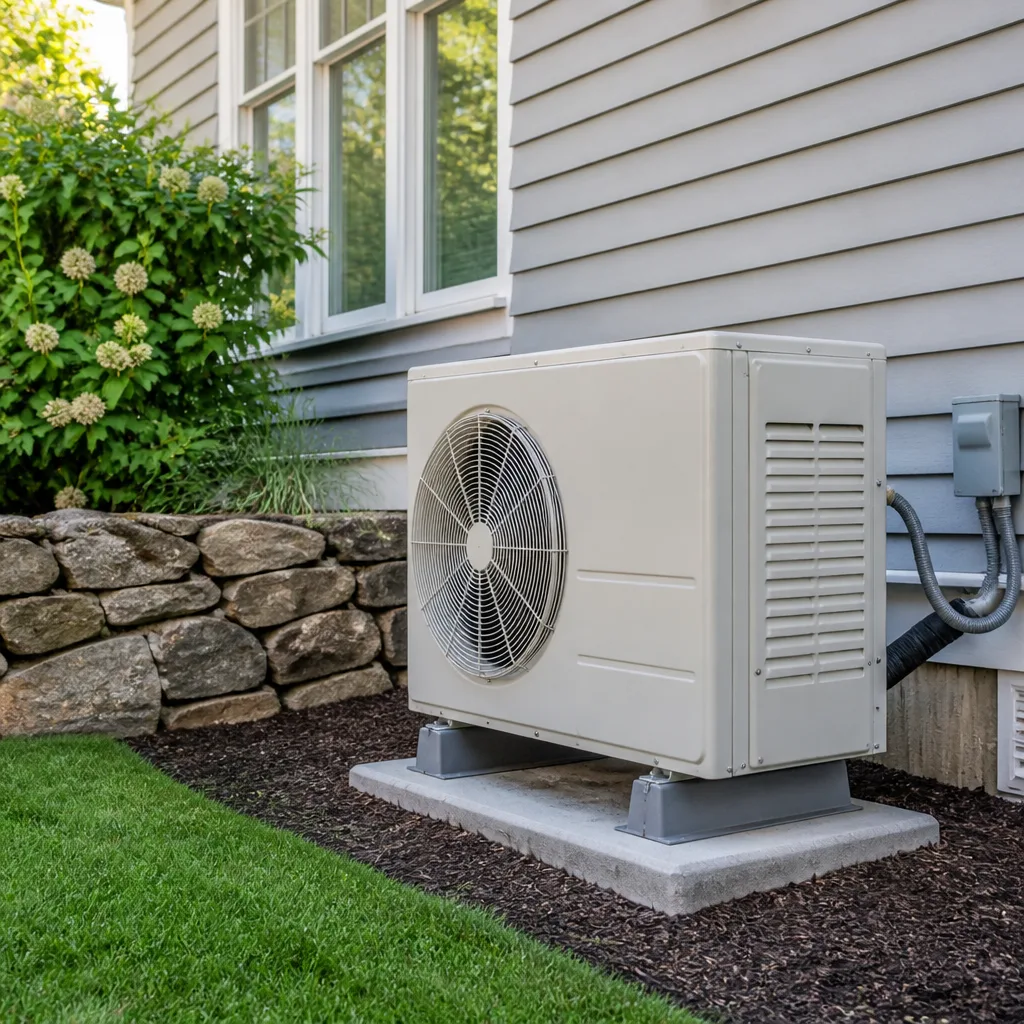 Heat pumps
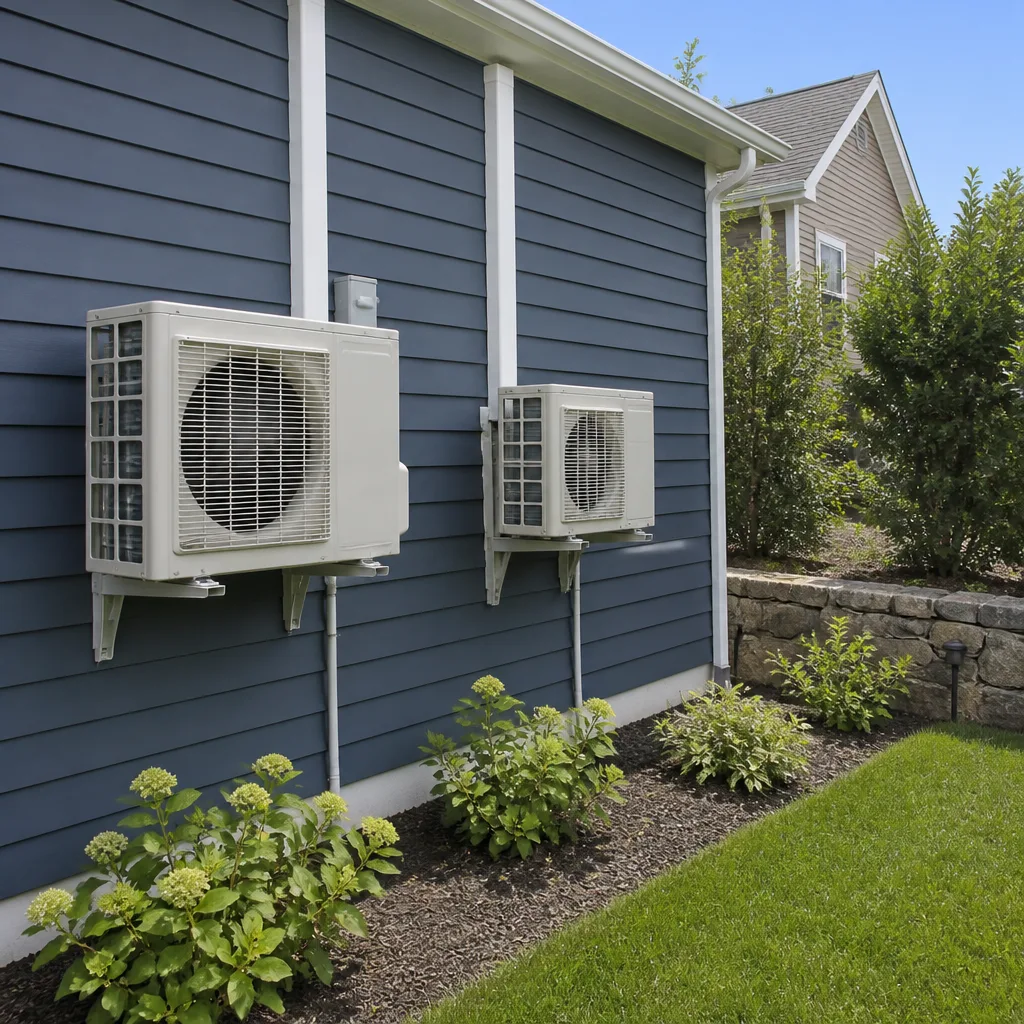 Ductless mini splits
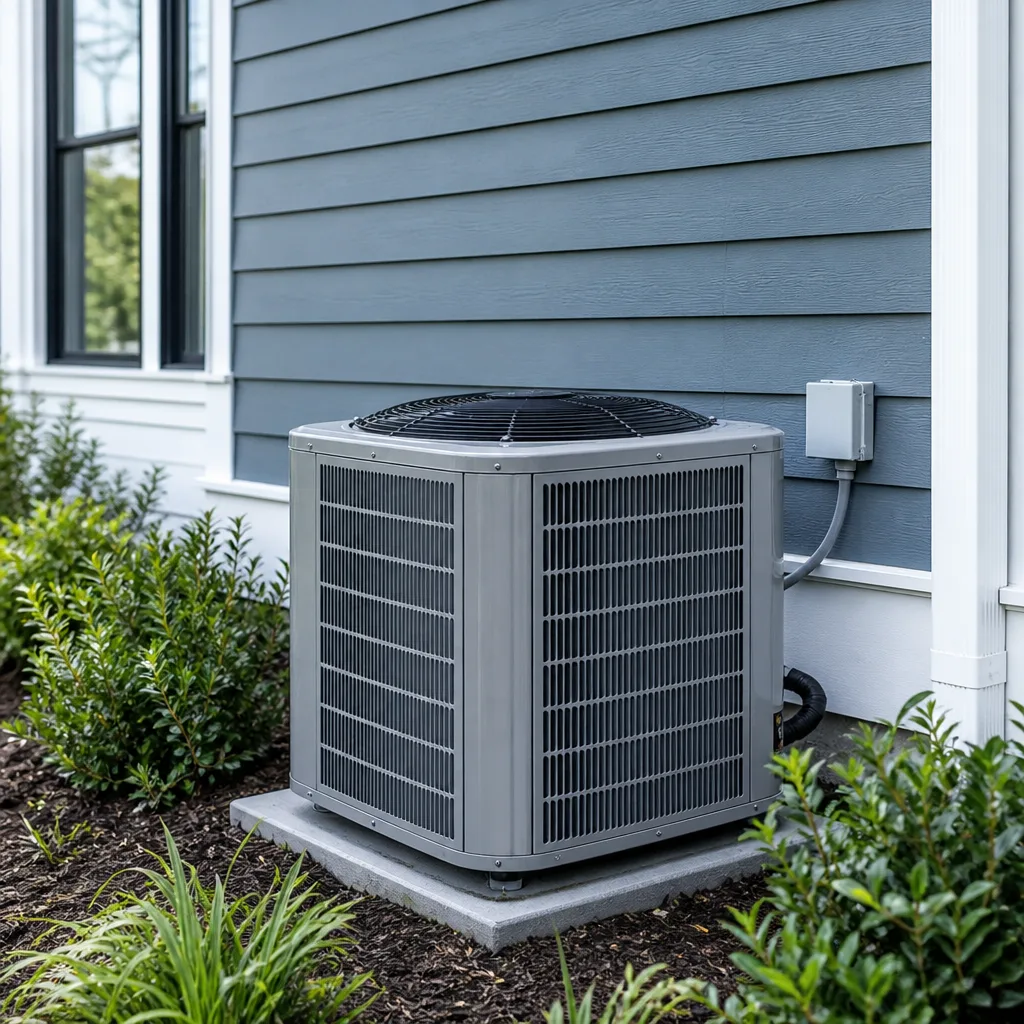 Carrier
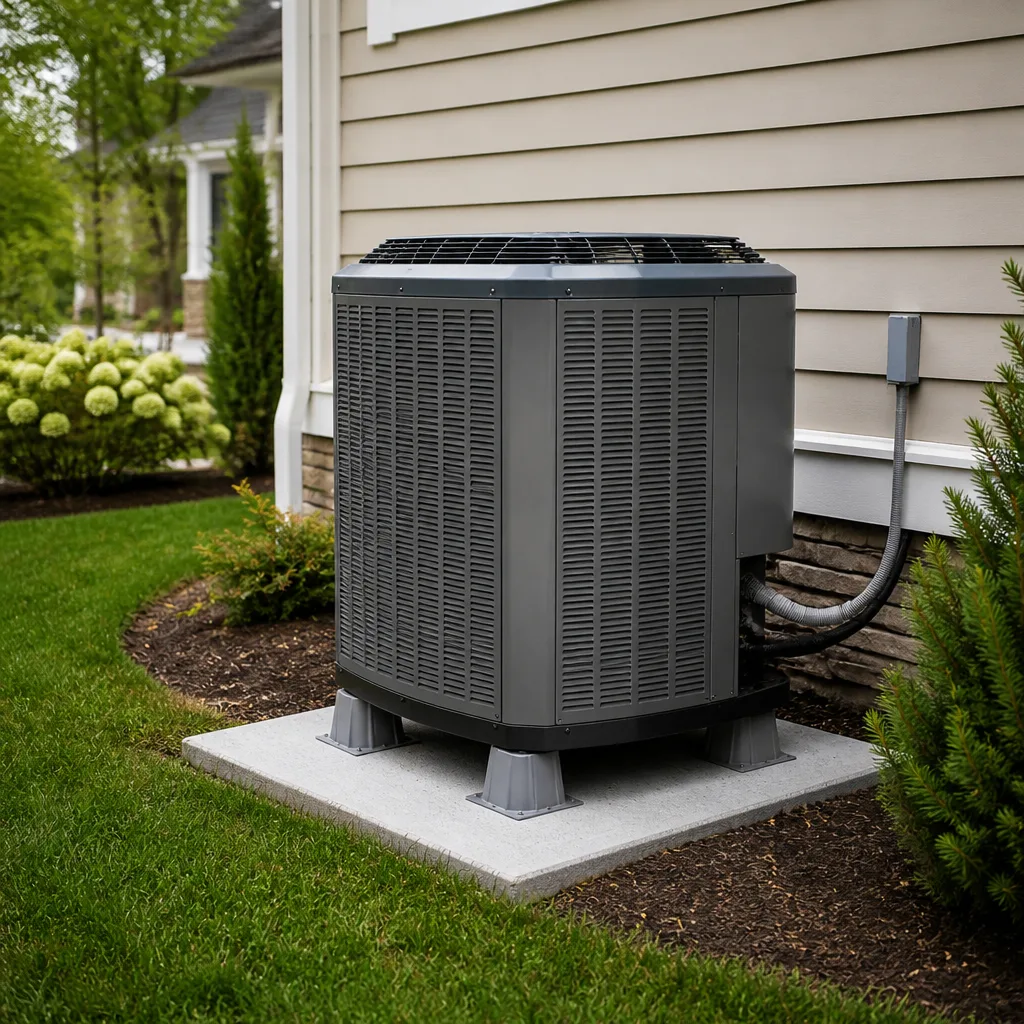 Trane
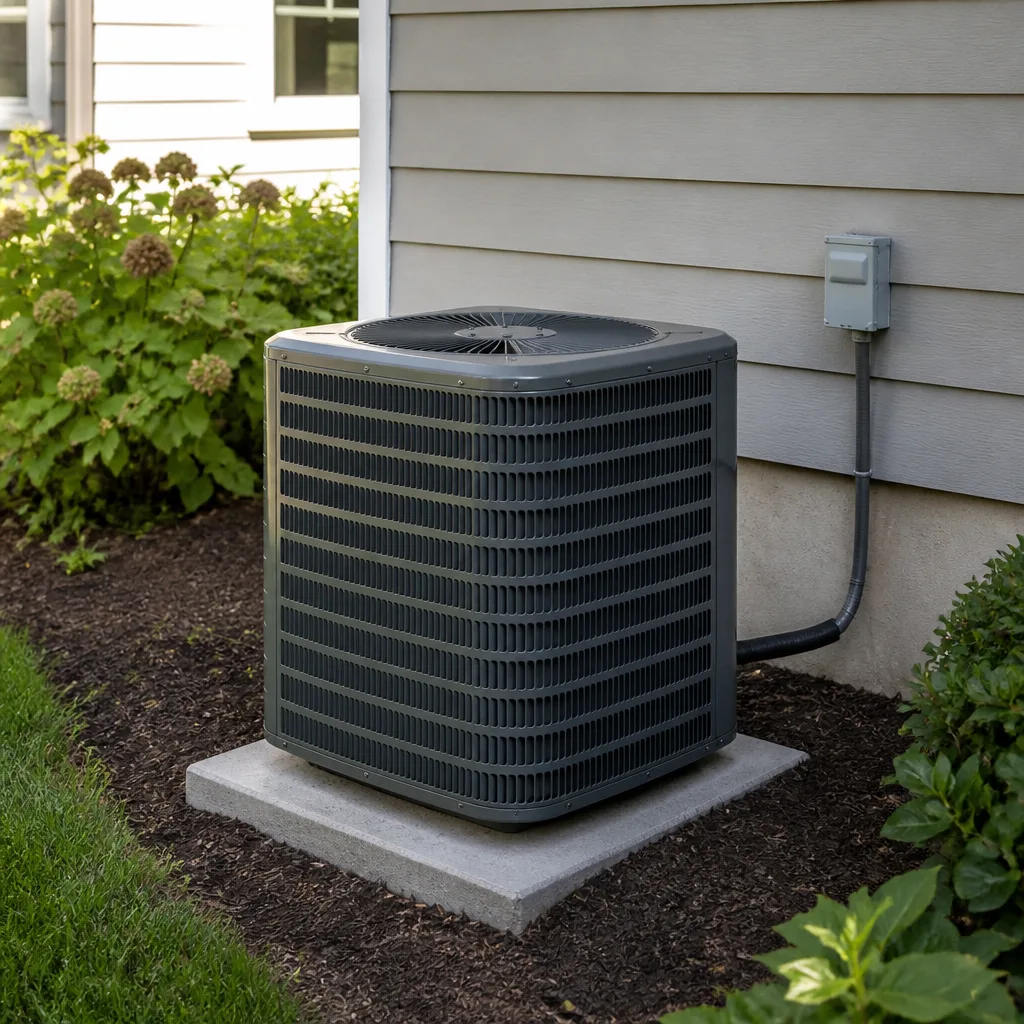 Goodman
Seasonal tune-up and full diagnostic on your Carrier, Trane, or Goodman system - readings shown to you before any repair is proposed
Diagnosis first, numbers second - you approve the repair price before a single part goes in.
Get your free estimateHVAC Warning Signs: A Miami Gardens Homeowner’s Reference Guide
Most HVAC warning-sign articles hand you the same seven symptoms and stop there. Frost on the line set. Water on the floor. A unit that runs all day. What they leave out is the part that matters: what each symptom is actually telling you, which component it implicates, and whether you’re looking at a cheap fix this week or an imminent compressor failure that gets expensive by the hour. A system that freezes up in Miami Gardens in July usually isn’t broken the way homeowners assume. It’s a refrigerant or airflow problem, and letting it thaw and restarting it can damage the compressor. This guide maps each warning sign to its likely cause, rates the urgency, and shows you how to describe what you’re seeing so a technician diagnoses faster.
Quick Answer
The warning signs that matter most in Miami Gardens are ice on the indoor or outdoor coil, short-cycling, warm air from the vents, water pooling near the air handler, and a compressor that trips the breaker. Ice and breaker trips are the urgent ones because both can lead to compressor damage. Most other symptoms – weak airflow, unusual noises, musty smells – are early-stage and cheaper to fix when you catch them early. Call (844) 560-6509. We answer 24/7. Fast dispatch from 7am to 7pm, Sunday through Friday.
Styles & brands we work with
- AC repair
- Furnace & heating
- Heat pumps
- Ductless mini splits
- Carrier
- Trane
- Goodman
Table of Contents
- What Each Warning Sign Is Actually Telling You
- Why Is There Ice on My AC Unit?
- Short-Cycling in South Florida Humidity: Why It’s Worse Than You Think
- Warm Air, Weak Airflow, and What They Point To
- Water, Smells, and Noises: Cheap Symptoms, Expensive Causes
- Tripped Breakers and the Compressor Warning
- How to Log and Describe Symptoms So Diagnosis Goes Faster
- Urgency Ratings: Schedule Soon vs. Shut It Down Now
What Each Warning Sign Is Actually Telling You
An AC system gives you the same handful of symptoms in every city, but the cause behind each one shifts with local conditions. In Miami Gardens, the combination of high heat, long cooling seasons, and heavy humidity means certain components fail faster and certain symptoms carry more weight. Here’s how the mapping works.
Warm air from the vents. This points to low refrigerant charge, a failing compressor, or a stuck reversing valve on a heat pump. In a cooling-first climate, a system running warm all summer works the compressor harder than it should. That’s the component you’re trying to protect.
Weak airflow with the fan running. Usually a clogged filter, a failing blower motor, or restricted ductwork. Cheap to fix if you catch it early. Left alone, restricted airflow drops the coil temperature and leads to ice – which we’ll get to.
Short-cycling (the unit kicks on, runs briefly, shuts off). Often blamed on an oversized unit, but in Miami Gardens humidity it’s frequently a thermostat issue, a refrigerant charge problem, or a control board that’s misreading temperature. Short cycles mean the system never runs long enough to pull humidity out of the air.
Ice on the coil or line set. Always a refrigerant or airflow problem. Never a sign that the system is cooling efficiently.
Water near the air handler. A clogged condensate drain line, almost every time. In a humid climate the drain carries a lot of water, and a clog can back up into the pan and eventually the ceiling. Simple to clear, expensive to ignore.
A tripped breaker on the outdoor unit. This is the one to take seriously. A compressor drawing too much current will trip the breaker repeatedly. Resetting it and hoping is how a repairable compressor becomes a replacement.
We work on the system you have, whether it’s a Lennox, Goodman, Rheem, or York unit. The symptom tells us where to look; the brand tells us what parts we’ll need and roughly how long the fix takes. Nine brands, one call.
Why Is There Ice on My AC Unit?
Ice on an AC unit means the coil is running below freezing, which means the system isn’t moving enough heat or enough air. It’s a refrigerant charge problem or an airflow restriction – often both. Ice is never normal and never a sign the unit is working hard and doing its job. It’s the system telling you it’s stuck in a bad cycle.
Ice shows up in two places, and they mean different things:
Ice on the indoor coil (the part in your air handler)
This usually means restricted airflow. The evaporator coil can’t absorb heat fast enough, so it freezes. Common causes are a filter that hasn’t been changed, a blower running slow, or a return duct that’s undersized or blocked. It can also mean low refrigerant, which starves the coil and drops its temperature.
Ice on the outdoor unit and line set
Ice here points more toward a refrigerant charge issue. When the system is low on refrigerant, the indoor coil gets too cold and the line set that carries refrigerant between the two units frosts up. On a heat pump, ice on the outdoor coil during a heating cycle can also mean a defrost control problem.
Here’s the part that matters most for Miami Gardens homeowners: don’t just shut the system off, let it thaw, and restart it. A compressor that’s been running with ice on the coil has been running under strain. Thawing and restarting without knowing the cause puts it right back in that strain, and liquid refrigerant slugging back to the compressor is how it fails.
What to check before you call:
- Look at your air filter. If it’s gray and matted, change it. A dirty filter is the cheapest possible cause of low airflow and it’s worth ruling out.
- Check that all supply and return vents in the rooms are open and not blocked by furniture.
- Note where the ice is: indoor coil, outdoor unit, or both. This one detail helps the technician more than almost anything else.
- Turn the system off at the thermostat. Running a frozen system in cooling mode does more damage than shutting it down.
If the filter is clean, the vents are open, and ice is still forming, that’s a call-it-in situation. Low refrigerant isn’t something to manage at home, and diagnosing it requires gauges and a trained eye. Call (844) 560-6509 – the estimate is free and the price is set per job by the written estimate.
Short-Cycling in South Florida Humidity: Why It’s Worse Than You Think
Short-cycling means the system runs in short bursts instead of long, steady cooling cycles. The usual explanation is an oversized unit, and that’s sometimes true. But in Miami Gardens humidity, there’s a second layer to the problem: short cycles never last long enough to remove moisture from the air.
A properly sized system runs long enough to pull a real volume of air across the cold coil. That’s where dehumidification happens – moisture condenses on the coil and drains away. If the system only runs five or ten minutes at a time, it never gets into that full latent-cooling range. You get cool-feeling air for a few minutes, then humidity creeps back in, then the system cycles again. The thermostat reads comfortable but the house feels clammy.
Over a full Miami Gardens summer, that pattern has two effects. First, your electric use climbs because the system is starting and stopping constantly – startup is the most energy-hungry part of the cycle. Second, the constant on-off cycling wears on the compressor and contactor. The compressor is the expensive part; every unnecessary start shortens its life.
Causes of short-cycling beyond an oversized unit
- Thermostat placement or calibration. A thermostat near a return vent, in direct sun, or on an exterior wall reads the wrong temperature and calls for cooling at the wrong times.
- A refrigerant charge problem. Undercharged systems behave erratically – sometimes running short, sometimes running long.
- A failing control board or contactor. Electrical components that are worn can drop the call for cooling before the cycle should end.
- A clogged filter or blocked coil. Dirty systems run into high-pressure limits and shut off on safety, then restart.
- An undersized return. If the return duct can’t feed the system enough air, the system shuts down repeatedly.
Short-cycling is a symptom with several possible causes, and the fix depends on which one is present. It’s also the symptom most often misdiagnosed as “needs a new unit.” We recommend repair or replacement based on the equipment’s actual condition and your budget, not the other way around. If a technician can’t explain why your system is short-cycling in plain terms, that’s worth noticing.
Warm Air, Weak Airflow, and What They Point To
Warm air from the vents and weak airflow are related symptoms that can have different causes. Getting the distinction right matters because one is often cheap and the other often isn’t.
Warm air but strong airflow
If the blower is pushing plenty of air but the air isn’t cold, the problem is in the cooling circuit. Possible causes:
- Low refrigerant charge. A leak somewhere in the system has reduced the charge. The compressor still runs, but it can’t cool effectively.
- A failing compressor. The compressor may be running but not pumping properly, or it may be tripping on internal protection.
- A stuck reversing valve on a heat pump system, causing the unit to cool when it should heat or vice versa.
- A dirty condenser coil outdoors, which prevents heat rejection. In Miami Gardens, outdoor coils pick up a lot of dust, pollen, and yard debris over a cooling season.
Cold-feeling air but weak airflow
If the system is cooling but you can barely feel it, the problem is airflow. That’s usually a dirty filter, a failing blower motor, restricted ductwork, or closed vents. This one is often the cheapest category to fix – and the one most worth catching early, because low airflow is what freezes a coil and eventually loads the compressor.
Intermittent warm air
If the air is cold sometimes and warm other times, that points to a control issue – thermostat, contactor, or a board that’s dropping the call for cooling. This symptom is worth logging carefully (see the section below on tracking symptoms) because it can be hard to reproduce during a service visit if you can’t tell the technician when and how often it happens.
Our technicians have up to 11 years of experience with these systems, and we’ve seen the same causes behind warm air over and over. Nine times out of ten the fix is a refrigerant charge issue, a dirty coil, or an air handler problem – all things we can diagnose on the first visit and quote accurately. We’re certified to work on Carrier, Trane, Lennox, Goodman, Rheem, York, Daikin, Bryant, and American Standard equipment, so the quote comes from the actual system you own.
Water, Smells, and Noises: Cheap Symptoms, Expensive Causes
Water where water shouldn’t be is one of the most common AC service calls, and it’s also one of the least expensive to fix when you catch it early. The trick is knowing where the water is coming from and what it usually means.
Water near the indoor air handler or in the pan. A clogged condensate drain line, almost every time. In a Miami Gardens summer, the air handler produces a steady stream of condensate – that’s water pulled out of the humid air. If the drain line clogs (algae growth, dust, insect nesting), the pan fills and eventually overflows. A drain clearing is a quick, low-cost service. Left alone, the overflow can damage the ceiling, the air handler cabinet, and any drywall or flooring below. That’s when the fix stops being cheap.
Musty or mildew smell from the vents. Moisture sitting on the evaporator coil or in the ductwork. It’s usually a sign of airflow or drainage problems, sometimes a coil that’s not draining correctly. Not urgent, but worth addressing – it points to moisture in a place it doesn’t belong, and moisture in an AC system drives bigger problems over time.
Rattling or buzzing from the outdoor unit. A loose panel, a fan blade out of balance, or a worn contactor. Usually minor, but worth a look – a fan that’s out of balance can chew through its bearings, and a failing contactor can cause intermittent no-cooling calls.
Grinding or screeching. This is different. Grinding usually means a bearing is going out on the blower or fan motor. Screeching often means the compressor is struggling. Both are worth shutting the system down over until a technician looks at it.
Clicking from the outdoor unit, repeating. A compressor that’s trying to start and failing. The internal overload is protecting it, and the click is the contactor. Repeated clicking without the compressor coming on is a shutdown-it-now symptom. Each start attempt is drawing high current through the compressor windings. Continuing to run it can turn a compressor replacement into a full system decision.
Water and noises are the symptoms most often put off. They’re also the ones where catching them early saves the most money. Bellmont AC Repair offers AC repair across Miami Gardens, and we’d rather clear a drain for you than replace a compressor six weeks later. Call (844) 560-6509 for a free estimate.
Tripped Breakers and the Compressor Warning
A tripped breaker at the outdoor unit is the warning sign that most deserves immediate action. When a breaker trips repeatedly, the compressor is drawing more current than it’s rated for. That’s not a nuisance to reset – it’s a message that the compressor is at risk.
There are two categories of cause, and they’re worth separating.
Breaker trips once, then holds
Could be a power surge, an aging breaker, or a one-off. Not necessarily catastrophic, but worth having diagnosed. An intermittent trip that doesn’t recur can still point to a contactor or capacitor issue that will come back.
Breaker trips repeatedly
This is the one to treat as urgent. Common causes:
- A failing compressor. Worn windings or a seized compressor draw locked-rotor current until the breaker trips. Each reset attempt pushes the compressor harder.
- A failing run capacitor. A bad capacitor prevents the compressor from starting cleanly, and the start winding overheats. A capacitor is a low-cost part; a compressor is not.
- A short in the wiring or contactor. Sometimes the fault is upstream of the compressor itself, in the electrical path that feeds it.
- A failing breaker. Occasionally the breaker itself is old and tripping under normal load. This is the least common cause but the easiest to rule out.
Safety note: electrical panel and outdoor unit wiring work is dangerous. Capacitors hold a charge even after power is off, and HVAC circuits are high-current. This is not a DIY diagnosis. Don’t open the outdoor unit’s electrical panel, and don’t keep resetting a breaker that keeps tripping. Call a trained technician.
If your breaker has tripped more than once in a week, shut the system off at the thermostat and call. That single precaution can save the compressor. Call (844) 560-6509. We answer 24/7. Fast dispatch from 7am to 7pm, Sunday through Friday.
How to Log and Describe Symptoms So Diagnosis Goes Faster
Diagnostic labor is time. The more precisely you can describe what you observed, the faster a technician can identify the cause and the less time you pay for. This isn’t about diagnosing the system yourself – it’s about arriving at the visit with good information.
The symptom log
Keep a simple note (a phone note is fine) with the following, updated each time you notice something:
- What you observed. Warm air, ice on the indoor coil, water in the pan, a rattling noise, breaker trip. Use plain language.
- When it started. The date, or “about three days ago.” If you can remember whether it followed a filter change, a power outage, or a storm, note that too.
- How often it happens. Every cycle, once a week, only on hot afternoons. Frequency often separates one cause from another.
- What you did in response. Changed the filter, reset the breaker, turned the system off. This tells the technician what’s already been ruled out.
- Any pattern to the timing. Mornings vs. afternoons, first run of the day vs. after hours of operation. Patterns point at causes – like a contactor that fails when hot.
- Where the ice is (if any): indoor coil, outdoor unit, or line set.
- What the thermostat is set to and what the house actually feels like. A house set to 72° that reads 78° indoors tells the technician the system is losing ground.
What to bring to the call
- The equipment make and model number, if you can find it on the outdoor unit’s nameplate. This helps us source parts and price accurately, especially if it’s a Goodman, Rheem, Lennox, or York system.
- Roughly how old the system is.
- Any recent service history, including filter changes and previous repairs.
- Your log entries, even if they’re brief.
This is also the difference between a quote that’s accurate on the first visit and a second visit to confirm parts. Our brand coverage across nine manufacturers – Carrier, Trane, Lennox, Goodman, Rheem, York, Daikin, Bryant, and American Standard – reduces the “we’ll have to order that” delays that stretch a repair into a week without cooling. When you can tell us what brand and model you have, we can often come prepared.
Urgency Ratings: Schedule Soon vs. Shut It Down Now
Not every warning sign is equally urgent. Here’s how we’d categorize them, based on what each one threatens.
Shut it down now (compressor at risk)
- Repeated breaker trips on the outdoor unit. Compressor protection. Every reset is a gamble.
- Ice on the coil combined with the compressor running. Liquid refrigerant risk to the compressor.
- Repeated clicking from the outdoor unit with no compressor start. Locked-rotor condition.
- Grinding or screeching from the outdoor unit. Possible compressor or motor bearing failure in progress.
- A burning smell from the indoor or outdoor unit. Electrical component failure.
Schedule soon (comfort issue, still cheap to fix)
- Water in or near the air handler. Clogged drain. Not urgent this hour, urgent this week – overflow damages drywall and cabinet.
- Warm air with strong airflow. Refrigerant or compressor issue. Get it diagnosed quickly – running a system with a refrigerant leak or a struggling compressor accelerates the wear.
- Ice on the coil with the system off. Symptom of the freeze event. Still needs diagnosis, but shutting it down was the right move.
- Short-cycling. Humidity and efficiency issue that wears the compressor over time. Worth a visit.
Early-stage, worth a look (cheap fix if caught)
- Weak airflow with clean filter. Blower or duct issue. Diagnose before it freezes the coil.
- Musty smell. Moisture issue in the system. Not urgent, but worth addressing before it gets worse.
- Rattling panels or a low hum. Loose parts. Minor, but not something to ignore for a full season.
The reasoning is simple: the compressor is the most expensive single component in the system, and most of the “shut it down now” signs are things that threaten it. Everything else is cheaper to fix when you catch it. That’s the whole point of knowing your warning signs before they turn into a replacement conversation.
Common Mistakes to Avoid
- Letting a frozen coil thaw and then turning it right back on. It will freeze again. The underlying refrigerant or airflow issue is still there, and each restart puts more strain on the compressor. Turn it off and call.
- Resetting a tripped breaker over and over. Each reset is a fresh shot of current through a compressor that’s already struggling. Once is information. Twice is a warning. Repeatedly is how compressors die.
- Assuming short-cycling just means an oversized unit. In Miami Gardens humidity, thermostat placement, refrigerant charge, and control board issues are common causes, and treating the symptom as a sizing problem misses the actual fix.
- Ignoring a slow drain or drip pan overflow. Water near the air handler damages drywall, cabinet, and flooring in a way that’s much more expensive than the drain clearing that would have prevented it.
- Buying a replacement before anyone has diagnosed the current system. A lot of “replace it” calls are actually repairable refrigerant, capacitor, or contactor issues. Get a diagnosis from a technician who’ll explain the numbers, not just hand you a quote.
- Waiting for the symptom to show up during a service visit. Intermittent symptoms are the hardest to diagnose. If warm air only happens in the afternoon, write it down and tell the technician. It’s a shortcut.
- Running the system with a dirty filter to “save” on filter changes. A filter is the cheapest part in the system. A dirty one restricts airflow, freezes coils, and loads the compressor. Change it on a schedule.
See the difference
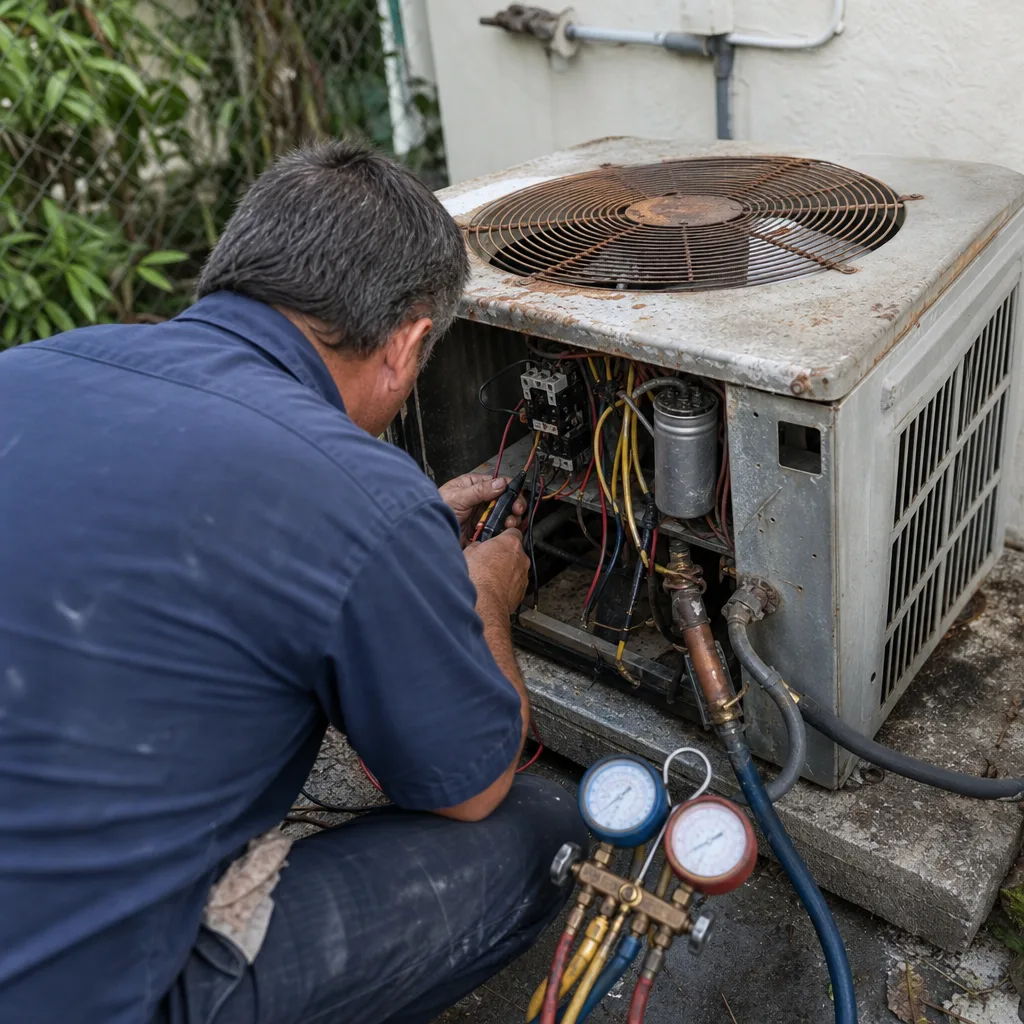 Before
 After
 Before
 After
 Before
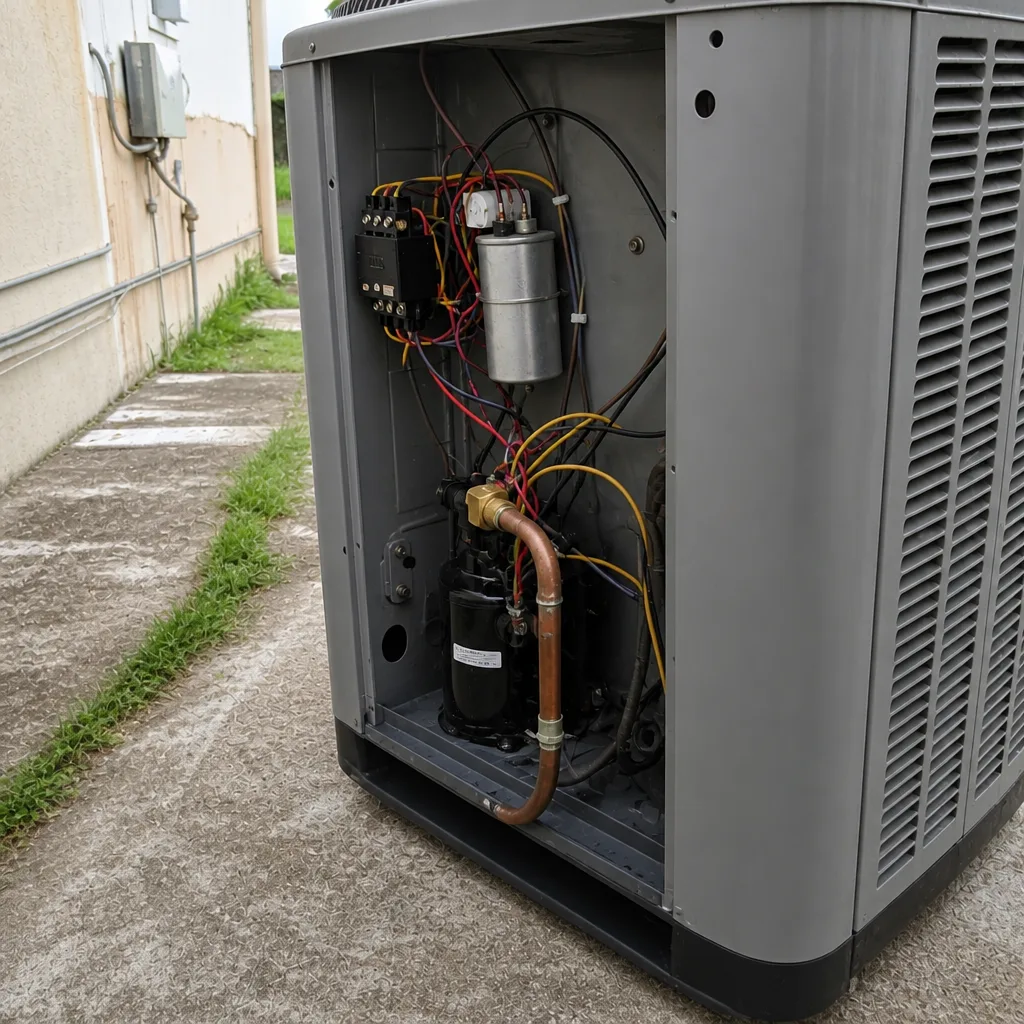 After
When to Call a Professional
Call a professional when the symptom is in the “shut it down” category, when it’s recurring, or when you’ve ruled out the simple causes. Ice on the coil with a clean filter and open vents. A breaker that’s tripped more than once. Warm air with strong airflow. Short-cycling. Water on the floor. Grinding or a repeated click. Any of these point to a cause that diagnosis and parts work are the only path through.
There’s also a scheduling argument. In a Miami Gardens cooling season, systems sit near their capacity for most of the day. A small problem – a capacitor, a restricted drain, a low charge – grows faster when the system is working hard. Getting on the schedule early, before a small issue becomes a no-cooling call in August, is the practical move.
Bellmont AC Repair offers free estimates in Miami Gardens – call (844) 560-6509. We’re certified across nine major HVAC brands, we work on the system you already have, and we recommend based on the unit’s condition rather than a preferred product line. Repair or replace – here’s what the numbers actually say.
Frequently Asked Questions
A breaker that trips more than once at the outdoor unit. It means the compressor is drawing excessive current, and each reset risks turning a repairable component into a replacement. Shut the system off at the thermostat and call. Call (844) 560-6509 for a free estimate – the price is set per job by the written estimate.
Ice means the coil is running below freezing, which points to low refrigerant or restricted airflow, not “the system is working too well.” In Miami Gardens, a dirty filter is the first thing to check, and if the filter is clean, a refrigerant leak or blower fault is the likely cause. Don’t thaw and restart without diagnosis.
Same-day service is available for most no-cooling calls. Call (844) 560-6509. We answer 24/7. Fast dispatch from 7am to 7pm, Sunday through Friday. A no-cooling system in extreme heat is a health risk, so we prioritize those calls.
Yes, because of the humidity. Short cycles don’t run long enough to dehumidify, so the house stays comfortable on the thermostat but clammy in the air, and the constant starts wear on the compressor. Oversized units are one cause, but they’re not the only one – thermostat placement, refrigerant charge, and control board issues are just as common.
The price is set per job by the written estimate, and the estimate is free. There’s no service-call fee or diagnostic fee. What we can tell you is that early-stage repairs – a capacitor, a drain clearing, a refrigerant charge – are far cheaper than a compressor replacement, which is why catching warning signs early matters. Call (844) 560-6509 for an exact quote.
That depends on the specific combination – what’s failing, how heavily the system is being used, and what the repair cost looks like against replacement. Multiple signs at once don’t automatically mean replacement. A brand-agnostic diagnosis tells you exactly which components are at fault. Call (844) 560-6509 – we’ll walk you through the numbers in plain terms.
The Bottom Line
Every warning sign on an AC system points at a specific component, and each one falls into an urgency tier. Ice, breaker trips, and a clicking compressor are shutdown-it-now signals because they threaten the compressor. Water, short-cycling, and warm air are schedule-soon signals. Weak airflow, musty smells, and minor noises are early-stage and worth a look. The key move for any Miami Gardens homeowner is simple: note what you see, when it happens, and how often, then call with that information. It saves diagnostic time and gets you an accurate quote. For AC installation decisions or repair, the same applies – diagnose first, then decide.
Contact Us
Bellmont AC Repair works on the system you have – across nine major brands and everything your home needs to stay cool. If you’re seeing any of the warning signs in this guide, or you’re not sure what you’re looking at, call (844) 560-6509 for a free estimate. We answer 24/7. Fast dispatch from 7am to 7pm, Sunday through Friday. Nine brands. One call. Fast diagnosis, clear options, no pressure.
Visit Bellmont AC Repair for more information, or check out our Miami Gardens service page to see how we work in your area.
Written by the team at Bellmont AC Repair.