
Last updated November 14, 2026
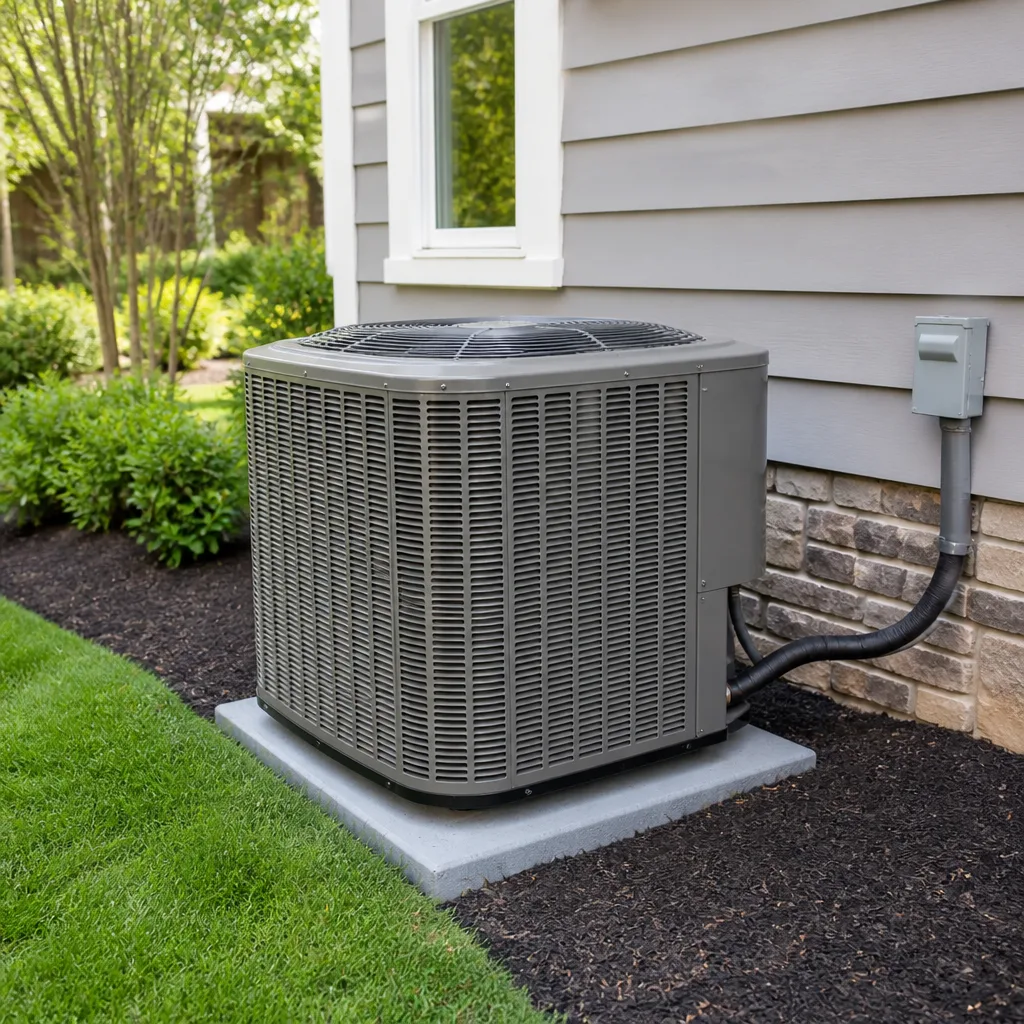 AC repair
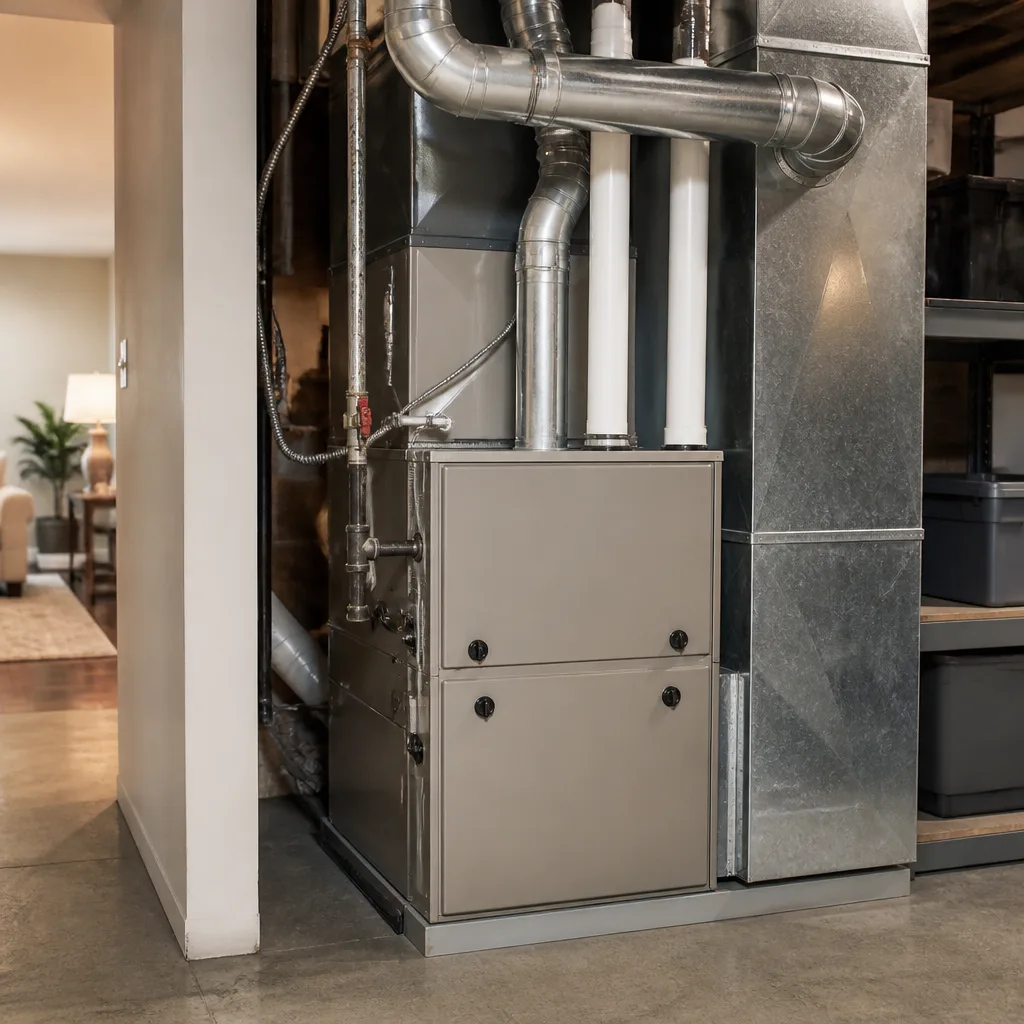 Furnace & heating
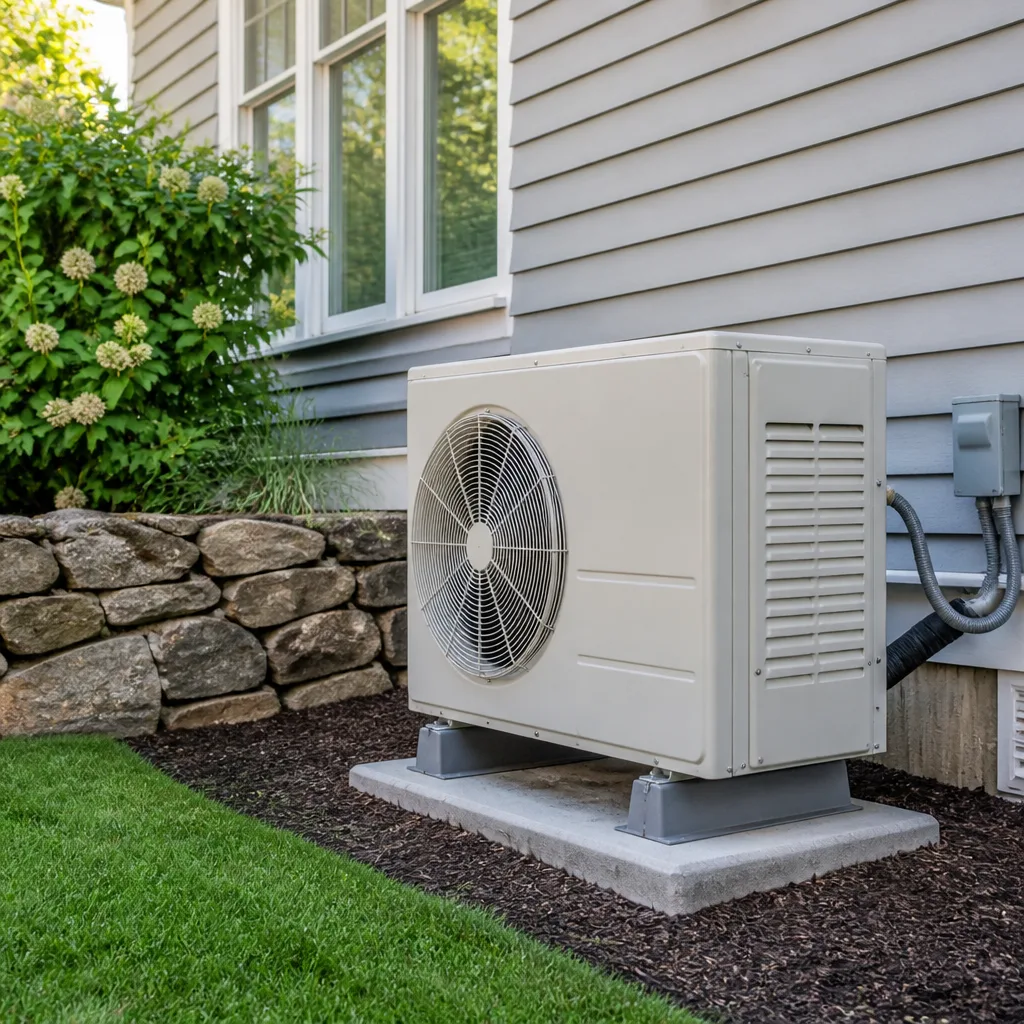 Heat pumps
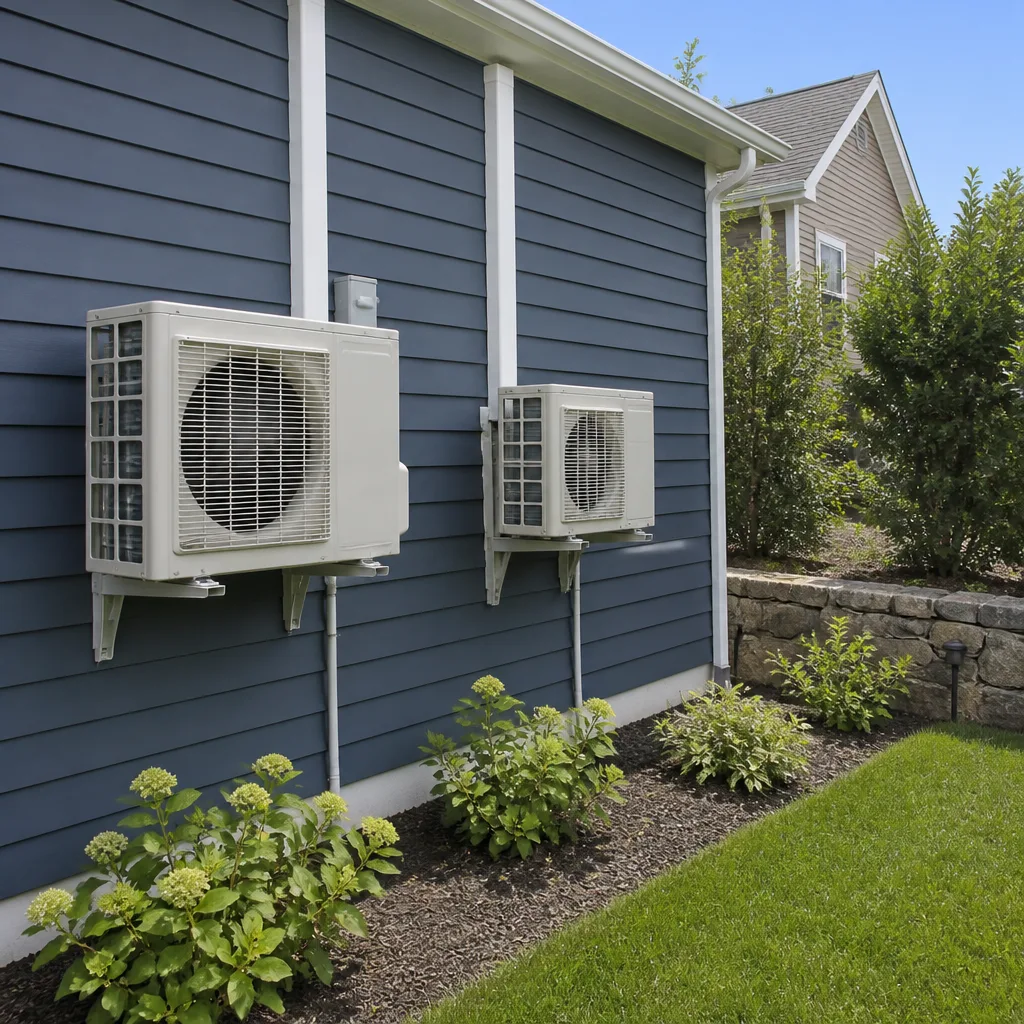 Ductless mini splits
 Carrier
 Trane
 Goodman
Seasonal tune-up and full diagnostic on your Carrier, Trane, or Goodman system - readings shown to you before any repair is proposed
Diagnosis first, numbers second - you approve the repair price before a single part goes in.
Get your free estimateDIY vs Professional HVAC: The Miami Gardens Homeowner’s Decision Guide
Replacing your own capacitor in Miami Gardens is legal, costs about $15 in parts, and takes 20 minutes with a discharge tool and a screwdriver. Topping off your own refrigerant is illegal under federal EPA Section 608 rules, full stop – and no YouTube tutorial changes that. Most homeowners treat DIY versus professional HVAC as a question of skill or bravery. It’s not. It’s a question of what federal and Florida law actually permit an unlicensed homeowner to do, which tasks void the warranty on your carrier, Goodman, or Rheem equipment, and which jobs need tools you can’t rent at a hardware store. This guide walks through all three, task by task, so you can decide where your weekend time is well spent and where the math tips the other way. We’ll also cover how to talk to a technician once one is on site, because an informed homeowner gets better answers.
Quick Answer
In Miami Gardens, a homeowner may legally replace simple electrical components like capacitors, contactors, and thermostats, clean the outdoor condenser coil, change filters, and clear drain lines. Anything involving refrigerant, brazing, evacuation, or the sealed refrigeration circuit requires a licensed technician and is illegal under federal EPA Section 608 rules. Warranty terms on most major brands also void coverage when unqualified work causes the failure. The dividing line isn’t confidence – it’s the sealed system and the warranty.
Styles & brands we work with
- AC repair
- Furnace & heating
- Heat pumps
- Ductless mini splits
- Carrier
- Trane
- Goodman
Table of Contents
- What Florida law actually allows you to do yourself
- Which DIY tasks void a manufacturer warranty
- Tools you can rent vs. tools that make professional work non-negotiable
- The honest risk-reward math, task by task
- Why Miami Gardens climate changes the calculation
- How to work with a technician as an informed homeowner
- When DIY stops being the question and replacement enters the conversation
- Common mistakes to avoid
What Florida law actually allows you to do yourself
Florida regulates air conditioning work through the Certified Air Conditioning Contractor license, usually shortened to CAC. The Florida Department of Business and Professional Regulation issues that license and enforces the rules. When you’re deciding what to touch yourself, the line is drawn around the refrigeration circuit and the work that requires a license to perform for pay or for others. Working on your own home is a different category, and that’s where homeowners have real legal room.
Here’s the practical breakdown.
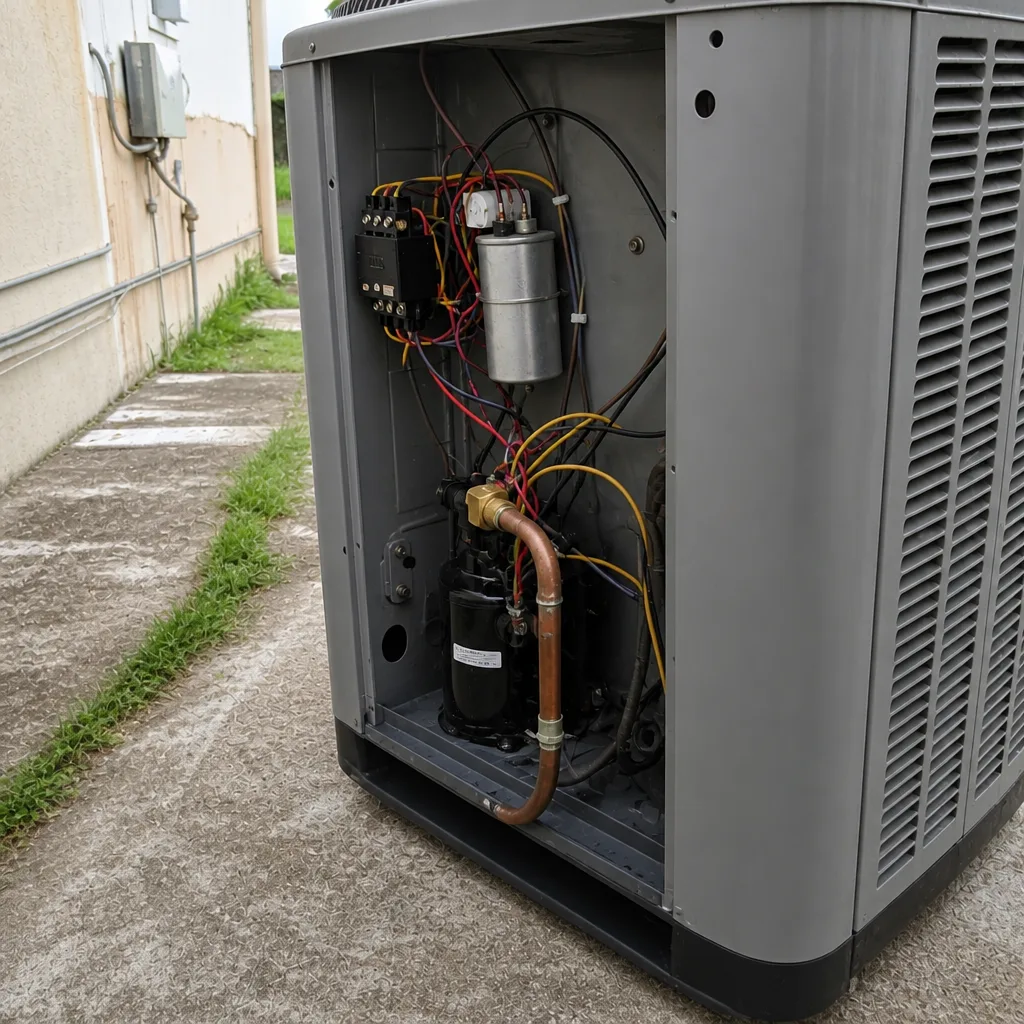
- Legal for a homeowner on their own home: Swapping a run capacitor, replacing a contactor, changing out a thermostat, cleaning the outdoor coil, flushing a condensate drain line, replacing filter grilles, and inspecting insulation on the suction line.
- Illegal without EPA Section 608 certification: Adding or removing refrigerant, recovering refrigerant, evacuating a system with a vacuum pump and micron gauge, and opening the sealed circuit for any reason. Section 608 applies to everyone, not just contractors, and venting refrigerant to the atmosphere carries federal penalties.
- Requires a licensed contractor: Brazing line sets, replacing a compressor or evaporator coil, and any work where the system must be pumped down and recharged. In most Florida jurisdictions, installing a new system also requires a permit pulled by the licensed contractor.
- Grey area to avoid: Anything that has you opening the electrical panel beyond the disconnect at the condenser. Panel work is licensed electrical work, not HVAC work, and it’s genuinely dangerous.
If you’re not sure whether a task crosses the line, the safe rule is this: if the repair opens or adds to the refrigerant circuit, stop and call. For the tasks that don’t, you’re on solid ground. If you’d rather not go near the panel or the capacitor at all, our AC repair team handles those calls across Miami Gardens and can tell you exactly what failed.
Which DIY tasks void a manufacturer warranty
Manufacturer warranties on residential HVAC equipment are surprisingly uniform in one respect: they require installation and service by a qualified or licensed technician for the warranty to remain in effect. The specific language varies a little by brand, but the pattern is consistent across Carrier, Goodman, Trane, Rheem, Lennox, and York.
The typical structure has two parts. The parts warranty covers the compressor, coils, and other components for a set period. The labor warranty covers the cost of installing those parts and is almost always shorter. Both parts commonly include a clause stating the warranty is void if the equipment is not installed or serviced by a licensed or qualified contractor, or if damage results from improper installation or service.
What that means in practice:
- Changing a filter, cleaning a coil, or flushing a drain line won’t void anything. Those are maintenance items the homeowner is expected to handle.
- Replacing a capacitor yourself is usually fine on its own – but if the new capacitor is the wrong microfarad rating and the compressor fails as a result, the failure can be attributed to improper service. That’s where the warranty question gets real.
- Opening the sealed system, adding refrigerant, or attempting a compressor swap without a license is a near-certain warranty void on the affected components. Manufacturers ask for proof of licensed service when a large claim comes in.
- Damage from an unlicensed repair on a Goodman or Rheem unit in Miami Gardens is treated the same as damage from an unlicensed repair anywhere else – the warranty language doesn’t care where the house is.
Keep every receipt for the parts you install yourself. If a warranty claim comes up later, that paper trail is what proves the failure wasn’t your fault. When a claim is on the line, having the diagnostic done by a shop that works across the major brands – the way we handle Bellmont AC Repair calls – means the paperwork matches what the manufacturer expects to see.
Tools you can rent vs. tools that make professional work non-negotiable
A lot of DIY guides skip this part. The tool list is where the honest answer lives, because some of these you can pick up for under $20 at a Miami Gardens hardware store, and some you cannot rent at any price at a consumer rental counter.
Tools worth owning for legitimate DIY
- Multimeter – tests capacitors and verifies power at the disconnect. Under $40 and useful for years.
- Capacitor discharge tool – a resistor on a stick. Never handle a capacitor without discharging it first; the stored charge can knock you off a ladder.
- Nut drivers and a 5/16 and 1/4 inch set – the standard fasteners on most residential condenser panels.
- Coil cleaning pump sprayer and fin comb – for the outdoor coil, which in Miami Gardens collects pollen, dust, and lawn clippings fast.
- Shop vacuum with a condenser attachment – for pulling debris out of the cabinet before it lodges in the coil.
Tools that make professional work non-negotiable
- Manifold gauges – reading system pressures requires the right manifold and the ability to interpret subcooling and superheat. Owning the gauge is not the same as reading it correctly.
- Recovery machine and recovery cylinder – federal law requires refrigerant to be recovered, not released. This equipment is not a consumer item.
- Vacuum pump and micron gauge – any time the sealed circuit is opened, the system must be evacuated to a deep vacuum before recharging. Skipping this step traps moisture and acid in the system, which kills compressors.
- Nitrogen tank and regulator – used for pressure testing and purging while brazing. A fire and explosion hazard in untrained hands.
- Torch and brazing rig – for line set work. Brazing temperatures exceed 1,000 degrees and the work happens inches from flammable insulation.
The rule of thumb: if the tool list for a task includes the words “vacuum pump” or “recovery,” the job belongs to a technician. If it’s a screwdriver and a multimeter, you have a real choice.
The honest risk-reward math, task by task
Here’s where we get past the slogans. Not every DIY task saves real money, and not every professional call is money well spent. The math depends on three things: the cost of the part, the cost if you get it wrong, and whether the job will come back to bite you.
- Filter changes – DIY is a clear win. A few dollars per filter, replaced every month or two in Miami Gardens where the system runs nearly year-round. No risk. Do it yourself.
- Condenser coil cleaning – DIY usually wins. A sprayer, a fin comb, and 30 minutes. The risk is bending fins with the wrong pressure, so use low pressure and a straight stream. If the coil is packed deep or the unit hasn’t been touched in years, a professional cleaning with the right chemicals does a better job.
- Capacitor replacement – DIY wins if you match the part exactly. A capacitor costs roughly $15. Getting the microfarad rating or voltage rating wrong can take out the compressor or fan motor on the next cycle. Match the part number, discharge before touching, and photograph the wiring before you pull the old one.
- Contactor replacement – a modest DIY win. Same principle as the capacitor: match the part, photograph the wiring, verify power is off at the disconnect.
- Thermostat swap – DIY wins on the simple ones. A basic replacement thermostat is straightforward. A smart thermostat with a communicating system can require a common wire and specific settings that a technician should handle.
- Diagnosing a system that won’t cool – the DIY math usually loses. This is the task where a homeowner spends a weekend replacing parts on speculation. A technician with a manifold and a meter finds the actual fault in under an hour. Fast diagnosis, clear options, no pressure – that’s what the visit should deliver, and it’s cheaper than guessing.
- Refrigerant, brazing, or compressor work – DIY math doesn’t apply because it’s not legal. There’s no version of this where a homeowner saves money, because the “DIY” price is a federal penalty.
The pattern is consistent: part swaps where you can match the part exactly are good DIY candidates. Diagnostic work and anything inside the sealed circuit are not. If you’re standing in front of a system that won’t cool and you’ve already replaced a capacitor and a contactor, that’s when to call. Our team in Miami Gardens gets those calls often – the homeowner has spent $60 on parts and a Saturday, and the actual problem is a stuck reversing valve or a low charge.
Why Miami Gardens climate changes the calculation
Miami Gardens sits in a tropical monsoon climate, which means two things for HVAC decisions. First, the cooling season doesn’t really end. Most American homeowners get a 4-to-5 month break where the AC sits idle and minor problems stay quiet. Here, the system runs nearly every day of the year, so small faults compound faster. A capacitor that’s drifting out of spec in April becomes a compressor failure in August.
Second, the rainy season runs roughly May through October, and it brings a lot of moisture into the air and into homes. That humidity load is why condensate drain lines in Miami Gardens clog faster than in drier climates – the system pulls gallons of water out of the air every day, and the drain pan and line carry it all. A clogged drain line triggers a float switch that shuts the system down. It’s one of the most common “my AC stopped working” calls we see, and it’s also one of the few that a homeowner can genuinely prevent with a monthly flush.
Power reliability matters too. After a strong storm, voltage sags can take out capacitors and contactors in a cluster. If your system runs after a storm but the outdoor fan doesn’t start, check the capacitor before assuming the compressor is gone. A licensed technician with a meter will find that in minutes.
The upshot for DIY decisions: because the system doesn’t get a seasonal break, maintenance tasks that would be optional in a cooler climate are genuinely load-bearing in Miami Gardens. Monthly filter changes and drain line flushes aren’t a suggestion here – they’re what keeps a system alive through the long cooling season.
How to work with a technician as an informed homeowner
Being an informed homeowner doesn’t mean doing the work yourself. It means understanding what the technician found and why it matters. That’s the difference between a repair that holds and a repair that comes back.
- Ask for the diagnostic readings, not just the diagnosis. A good technician will show you the pressures, the superheat or subcooling, and the amp draw. If the diagnosis is “the compressor is weak,” ask what reading led to that conclusion.
- Ask whether the failed part explains the symptom. “The system isn’t cooling” has several possible causes. Ask the technician to walk you through why they ruled out the others.
- Ask what the repair includes. A capacitor replacement should include testing the new capacitor under load. A coil replacement should include a new filter drier, evacuation, and a recharge by weight. The written quote should spell out the steps.
- Ask about warranty coverage on the part. If the technician is installing a manufacturer part, the part may carry its own warranty. The labor warranty is separate and worth understanding.
- Know when a second opinion is warranted. A recommendation to replace a system that’s under a decade old, without readings that support it, is a moment to pause. So is a diagnosis of a failed compressor on a system where the actual readings point to a simpler problem.
- Ask what the system’s condition actually is. The recommendation should follow the equipment, not a preferred product line. A brand-agnostic shop will tell you whether the compressor, coils, and cabinet are worth saving.
A technician who can service nine brands – Carrier, Trane, Lennox, Goodman, Rheem, York, Daikin, Bryant, and American Standard – is less tempted to steer the diagnosis toward a system they sell. Nine brands, one call, and the diagnosis follows the equipment. That’s the standard we hold ourselves to at Bellmont AC Repair. When a shop only works on one manufacturer, “you need a new system” can become the default answer.
When DIY stops being the question and replacement enters the conversation
Every repair decision eventually becomes a replacement decision, and the timing isn’t a mystery. Three things point the same direction.
- Repairs that keep coming back. If the same component fails twice in a season, the underlying problem may be somewhere else. A compressor that keeps tripping its overload, a coil that keeps leaking refrigerant – these are signals, not just parts.
- Refrigerant that has to be replaced rather than topped up. Older systems that use R-22 are in a different reality than systems on R-410A or R-32. Every leak on an R-22 system is a decision point, because the refrigerant itself is being phased out.
- Efficiency and load. A system installed before the home was tightened up or re-insulated may be oversized or undersized for the home as it exists today. That’s a load calculation question, not a repair question.
The honest answer on replacement is that it should be a written-fixed-price conversation, with a set install date and a clear scope. It is not a same-day decision – it never is, because load calculations, equipment selection, and scheduling take time. Anyone who promises a same-day replacement is skipping steps. If you’re moving toward that decision, our AC installation page walks through how the process actually runs. The same holds if you’re in Miami Gardens and want to know whether your existing unit is worth another repair cycle.
Common Mistakes to Avoid
- Replacing parts on speculation. A homeowner who swaps a capacitor, then a contactor, then a thermostat, then a motor has spent a weekend and a few hundred dollars and still doesn’t know the actual fault. A technician with a manifold finds it in one visit. Test before replacing.
- Handling a capacitor without discharging it. Capacitors store enough charge to hurt you badly even after the power is off. Discharge with a proper resistor tool before touching the terminals, and put one hand behind your back while you work.
- Trying to “top off” refrigerant. Adding refrigerant to a system without knowing it’s low, without knowing what it’s low on, and without recovery equipment is illegal, dangerous to the system, and does nothing for the actual leak. This is the single biggest DIY regulatory mistake in the trade.
- Skipping the filter because “summer is almost over.” In Miami Gardens there’s no off-season. A dirty filter in February is the same problem it is in July – reduced airflow, frozen coils, and strain on the compressor.
- Bending the coil fins with a pressure washer. A high-pressure stream flattens the fins on the outdoor coil and turns a clean coil into a restricted one. Use low pressure and a straight stream, or a fin comb to straighten them after the fact.
- Not keeping receipts. Parts you install yourself are only proven legitimate if you have the receipt, the part number, and the correct rating documented. Manufacturers ask for this when a warranty claim is filed.
- Assuming a bare compressor failure is the end of the story. Compressors rarely die on their own. A failed compressor usually means something upstream – an overcharged system, a restricted metering device, or a capacitor that ran out of spec – is still there. Replacing the compressor without finding the cause leads to the same failure again.
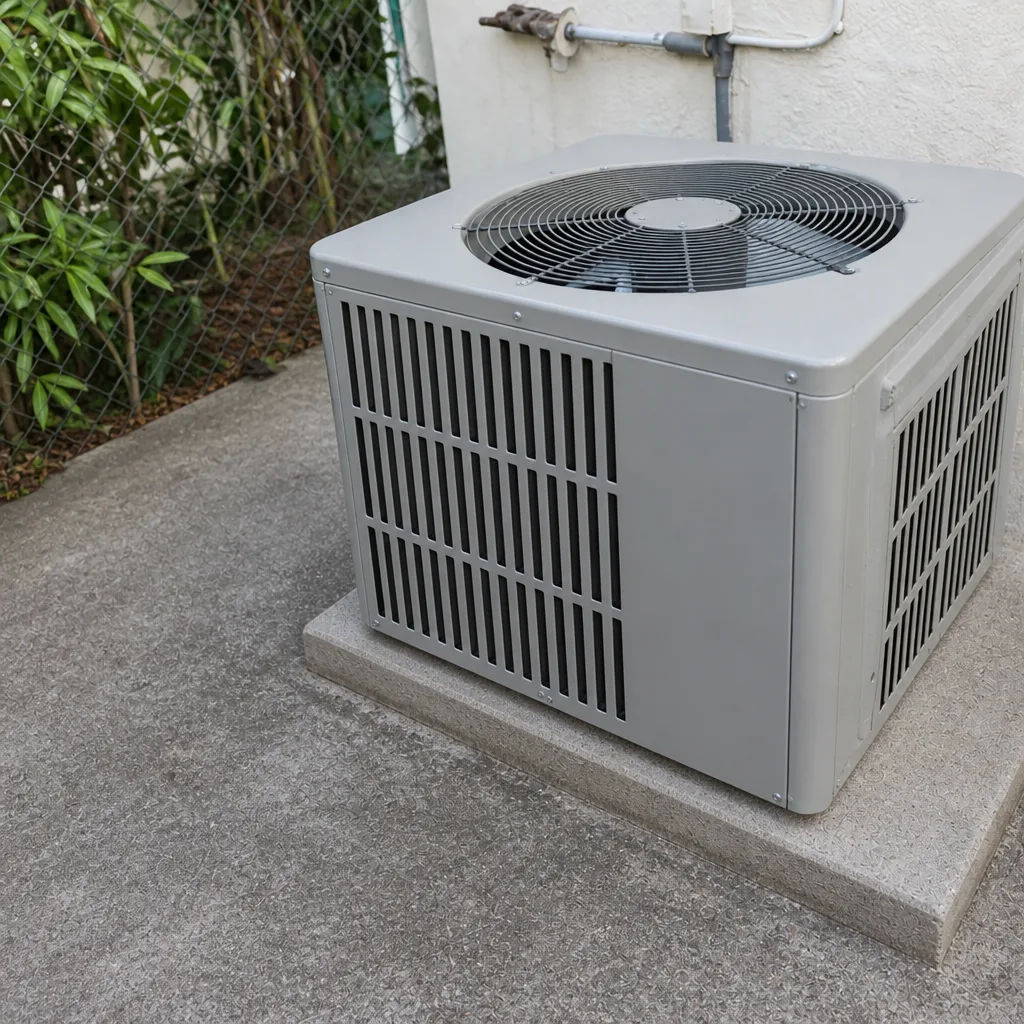
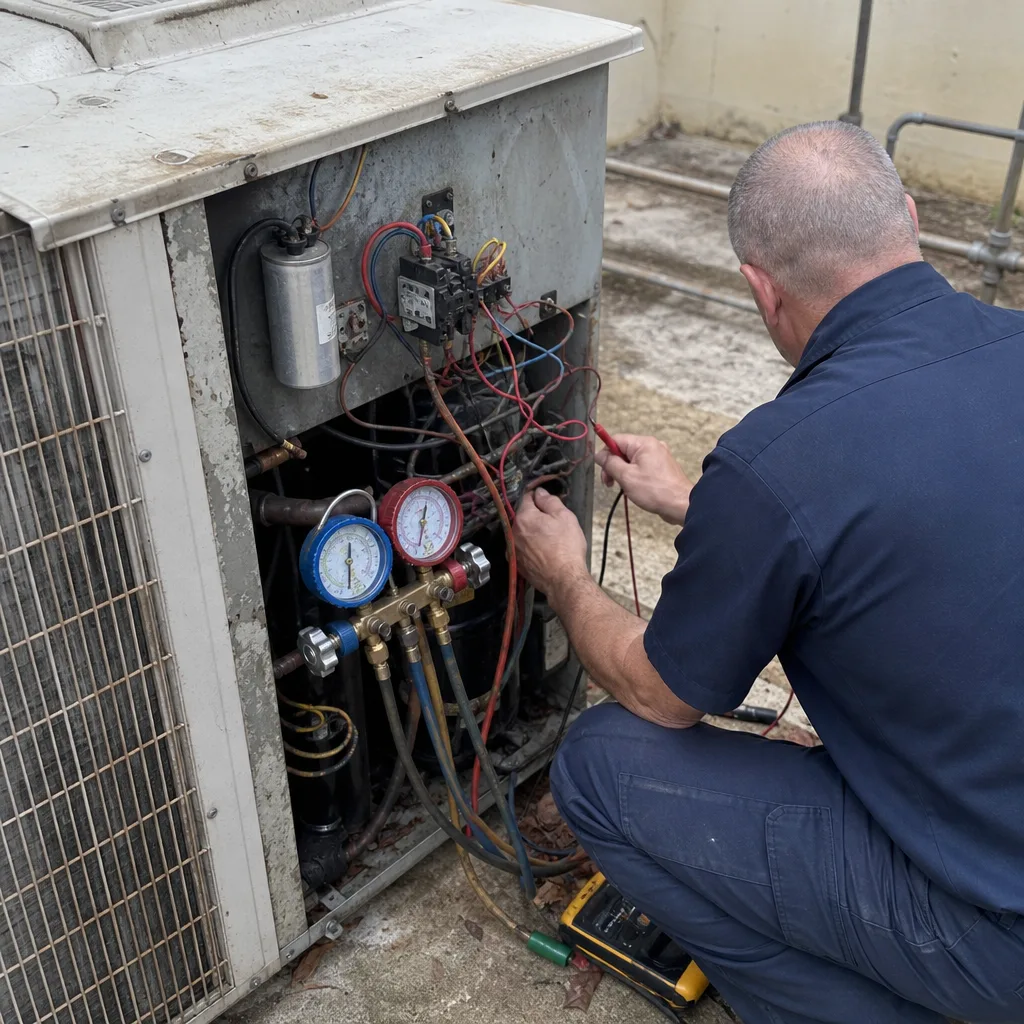
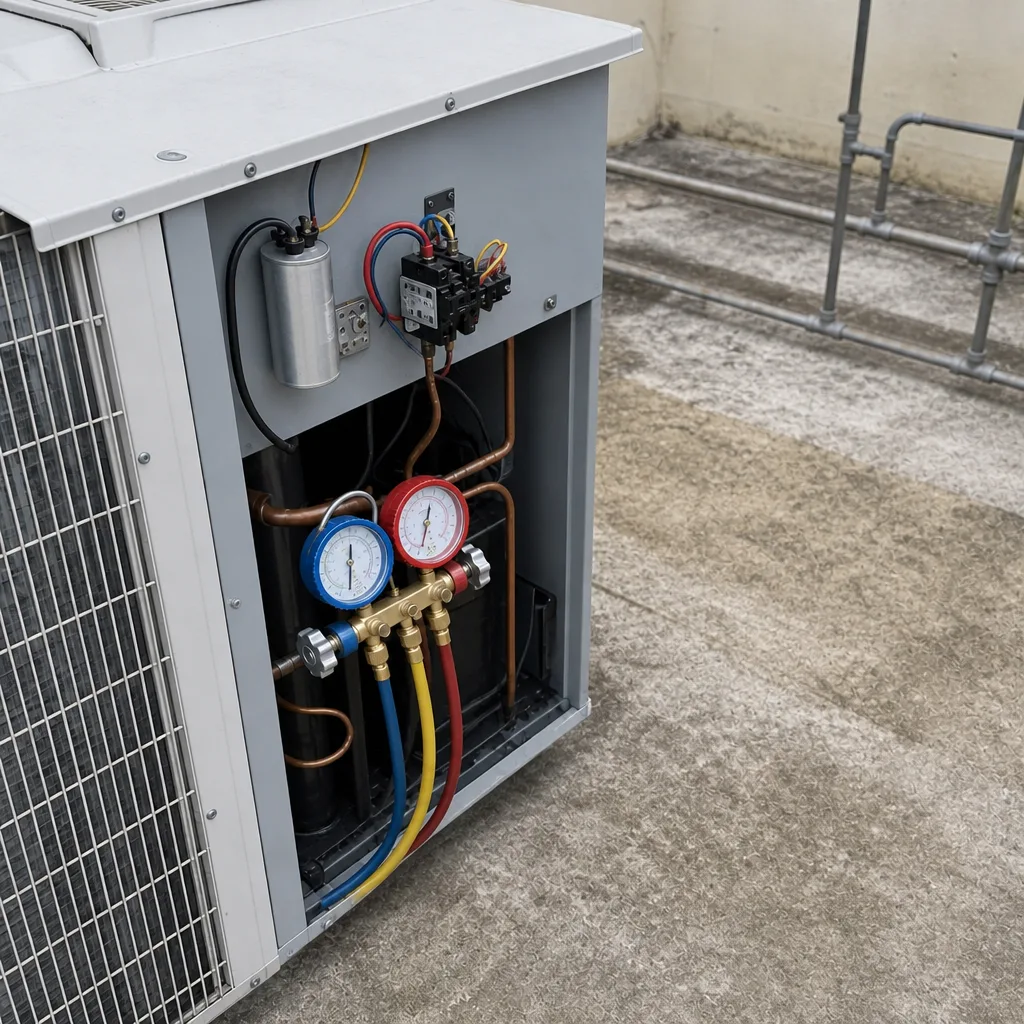
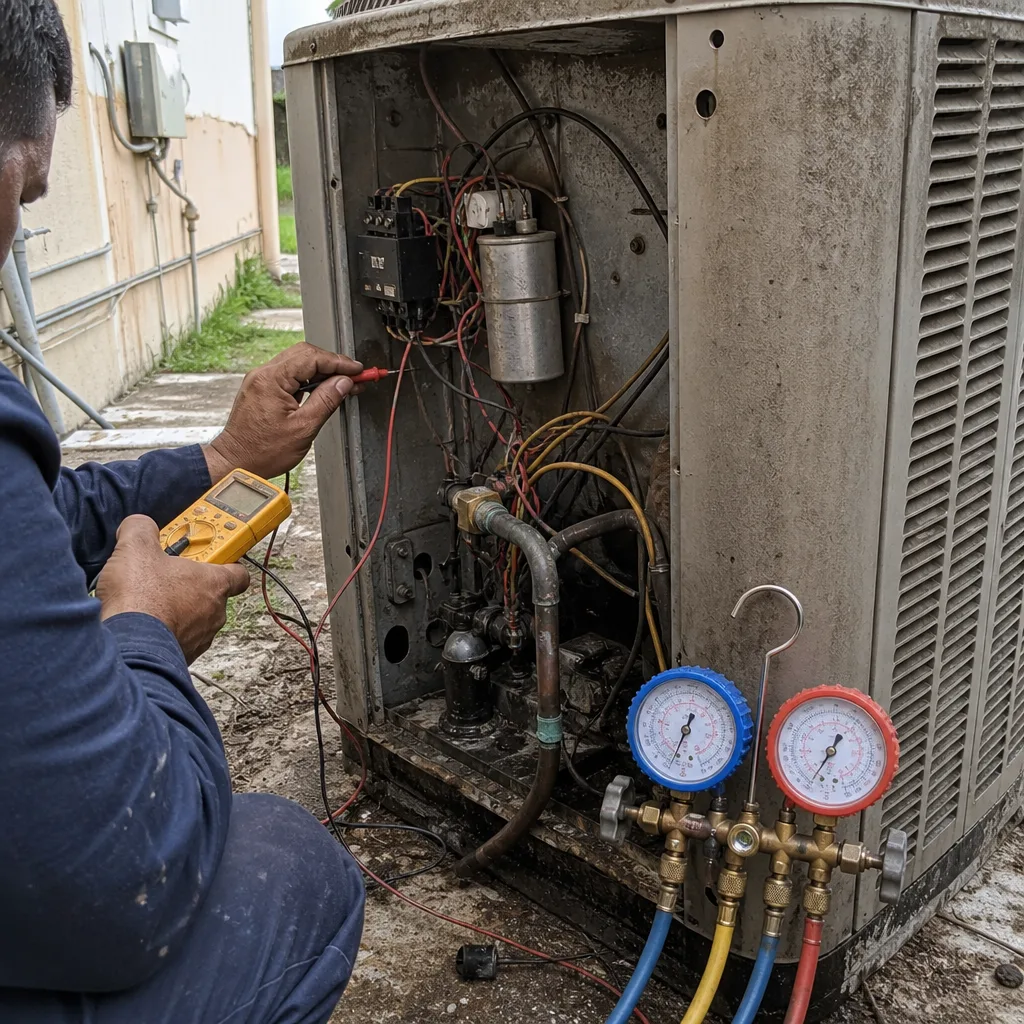
See the difference
 Before
 After
 Before
 After
 Before
 After
When to Call a Professional
Call a professional when the task involves the sealed refrigeration circuit, when a diagnostic has already been guessed at twice, or when the system is older than the warranty on it. Call when you can’t safely discharge or test a component, when the problem recurs after a repair, or when the recommendation is a full replacement you weren’t expecting. Those are the moments where a trained eye saves more than it costs. Call when you want a written estimate that says exactly what’s being done and what it will cost, without pressure to buy up. Bellmont AC Repair offers free estimates in Miami Gardens – call (844) 560-6509. Our technicians have up to 11 years of experience working on the system you have, not the one that’s easiest to service.
Frequently Asked Questions
Yes. Replacing a capacitor on your own home’s system is legal for a Florida homeowner, and a matching capacitor usually costs around $15. The risk isn’t the law – it’s getting the microfarad and voltage rating wrong, or touching a charged capacitor without discharging it. If you’re not confident matching the part, call (844) 560-6509 for an exact quote on the replacement – estimates are free.
Yes. Under federal EPA Section 608 rules, handling refrigerant requires certification, and that applies regardless of whether you’re working on your own system. Venting refrigerant to the atmosphere is a federal violation. No tutorial makes this legal. If you suspect the system is low on charge, call (844) 560-6509. We answer 24/7.
It can. Most residential manufacturer warranties – Carrier, Goodman, Trane, Rheem, and the rest – require installation and service by a licensed or qualified contractor. A simple part swap usually won’t void coverage on its own, but if a failure is attributed to improper service, the warranty on the damaged component can be refused. When a claim is on the line, a licensed diagnosis protects it. Call (844) 560-6509 for a free estimate.
Repair makes sense when the system is under a decade old, the repair cost is a fraction of replacement, and the fault is isolated. Replacement enters the conversation when the same component fails repeatedly, when the system uses phased-out refrigerant, or when the compressor is failing for a reason that would repeat. Call (844) 560-6509 for a written fixed price on either path – estimates are free.
Change filters monthly, flush the condensate drain line with a cup of water or a shop vacuum, clear debris from the outdoor cabinet and coil, and keep two feet of clearance around the condenser. Those four steps prevent a lot of Miami Gardens breakdowns. Everything else – refrigerant checks, electrical testing under load, coil cleaning with chemicals – needs a technician. Call (844) 560-6509 to book a visit.
Recovery machines, vacuum pumps, micron gauges, manifold gauges, nitrogen regulators, and brazing rigs are the core professional tools that make sealed-system work non-DIY. Some of these can be rented at contractor supply houses, but the equipment isn’t the point – knowing how to read the results is. Call (844) 560-6509 for a free estimate on the work you’d rather not tackle.
The Bottom Line
The DIY versus professional question in Miami Gardens comes down to three lines: the law, the warranty, and the tool list. Simple part swaps and maintenance tasks – filters, drain lines, coil cleaning, capacitors, contactors, thermostats – are legal, often cheap, and worth doing yourself. Anything that touches refrigerant, involves brazing or evacuation, or puts the warranty on the line belongs with a licensed technician. When the system has you guessing, a proper diagnosis pays for itself. Bellmont AC Repair handles AC repair, AC installation, and furnace repair across nine major brands. Call (844) 560-6509 for a free estimate. We answer 24/7. Fast dispatch from 7am to 7pm, Sunday through Friday.
Written by the team at Bellmont AC Repair.